Category: Portraits

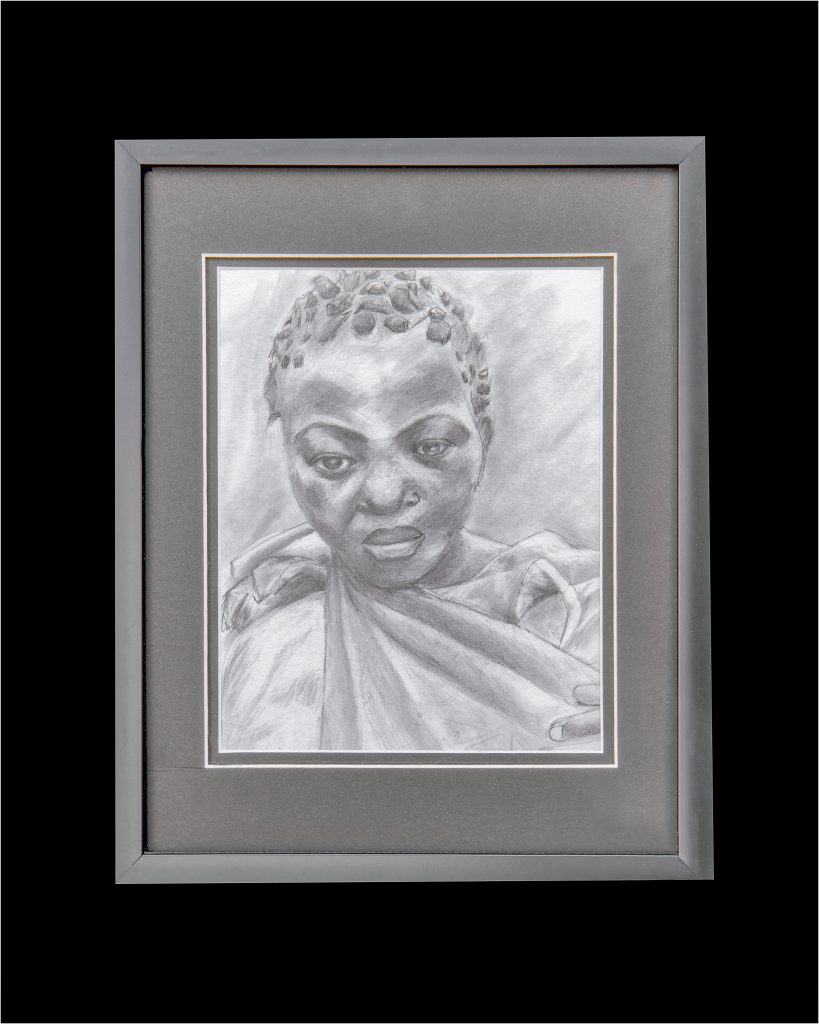
African Likeness

African Likeness

Traveling for 7 weeks in Africa for a low quality reality TV show, I found a disappointing lack of likeness to my African American students. I thought I would feel a connection to their ancestry. Towards the end of the trip, we visited a refugee camp with thousands of people from West-Central Africa, and everywhere I looked, I saw my students’ features. When I brought this up in conversation, I learned that most of the slaves kidnapped to the United States were from the regions that are present in that camp. The woman in this drawing was the spitting image of one of my students, Camilla. It was difficult to look into the eyes of refugees who were born, raised, and will die in these decades old camps, and see the spitting images of my students back home, and to witness the lasting impacts of slavery not just on race relations in the Unted States as we struggle to make reparations, but also in Africa, where colonialism and imperialism devastated existing cultures.
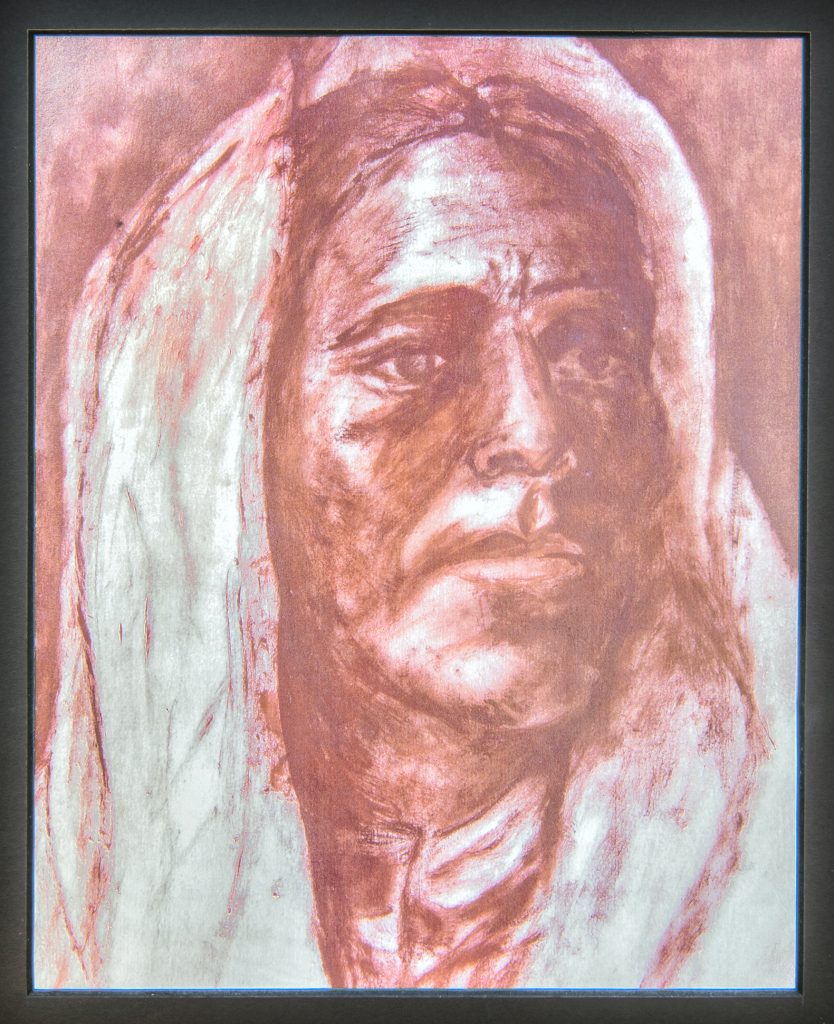
Native American Portrait Study

Native American Portrait Study

As Paul Papadonis, my high school art teacher, was teaching us how to draw portraits, I was becoming more and more fascinated with the people who were here before white settlers came and decimated their traditions, culture, and respect for the earth. I started using his lessons to copy portraits of Native Americans as I learned about new mediums at the same time. This one was completed with a stiff bristled paint brush and sticky brown printmaking ink. I wish I could find the original image that I plagiarized so I can give it credit for the composition!

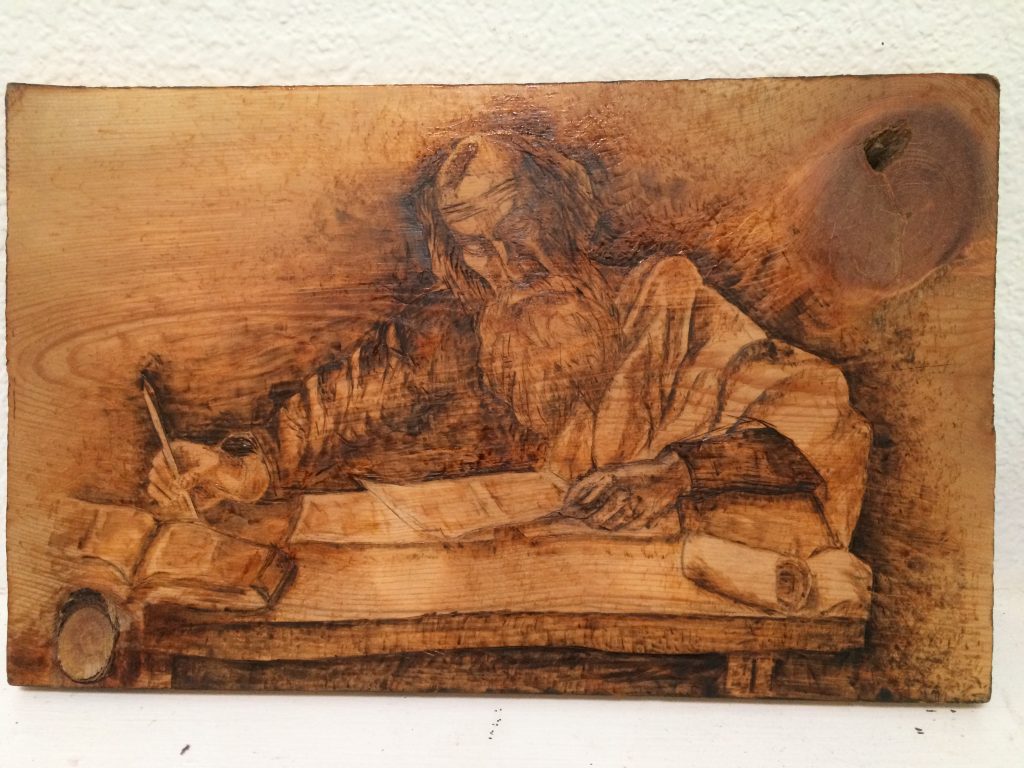
Saint Paul

Saint Paul

This one is for Abouna Paul Girguis and his Egyptian Coptic congregation. A day or so before I met the Copts volunteering in refugee camps in Athens, I spent the day with a Pakistani torture victim whose body was riddled with dents, holes, disfigurations and scars. He took the bandages off of his feet, revealing holes where nails had been driven in, and offered the bandages to me because I had blisters on my toes from inadequate sandals. A few weeks prior, he had been promised a new life with a group of people that would smuggle him out of Greece and then help him start his life over. However, the morning of the planned escape from Athens, they insisted he renounce Islam and become a Christian. His loyalty to his faith was more important than his freedom and security and safety, so homeless in Athens he would remain.

As I heard of another religious group coming to help refugees, I became protective of the refugees I was serving. I warned this new group, the Egyptian Coptics (“whatever THAT means,” I thought to myself), that I would bring them to the squat to help prepare the school, but only if they left religion out of it. We connected easily, and by the end of the meeting, were eating from each other’s plates and sipping from each other’s smoothies, but I still maintained my secular demands. Mina Sawires and Bobby Zaki returned to their apartment after our meeting and shared the bad news with their congregation, that while they would be allowed into the squat to help refugees, their connection into the squat (me) was completely anti-religion and had warned them sternly to keep all of their religious “baggage” out.

Something happened in my head and heart the night after our first meeting, and I was overcome with a feeling of protection. For the first time, I knew I wasn’t crazy for being on this trip. Unbeknownst to me, that night they started to feel that they were in Athens for a purpose besides the refuges – to offer me their love, and the protection that comes with that, and they prayed I would accept it. The next morning, I surprised myself as much as them when I asked at our meeting in the squat if they would like to open up the day with a prayer. From that moment on, unbeknownst to them, their presence guided me through the rest of the trip.

The last few days of the trip were filled with questions about God and suffering (really, if you want to test your faith in religion, go look at the conditions the refugees are living in). Minas never said he extended his stay to make sure I had all the support and protection that I needed while I was there on my own, but I’ll always wonder if that was part of the Plan. I simply was not going to survive my five weeks without something bigger than myself watching over me. The Copts became my connection to that big thing.

A year later, they remained a strong force in my life, as I wandered my way through trying to recover from the injuries to both body and spirit that that summer brought. They had no agenda to recruit me nor figure out if I’m a Christian or a Jew or a Muslim or a Hindu or a Buddhist. They just, relentlessly, offer me love. This is what religion is supposed to be.

The Egyptian Copts are people of peace and love. In response to church bombings on Easter a few years ago, Abouna Paul wrote to me, “We love them still, and we forgive them.”

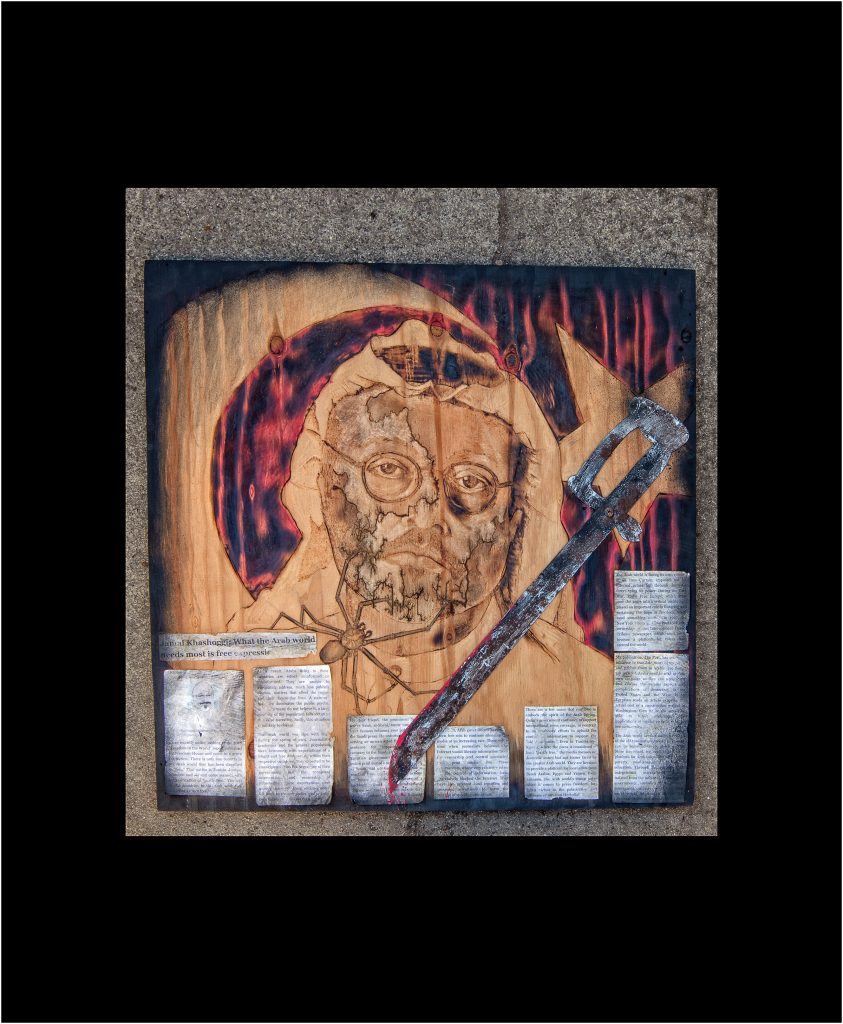
Beast Khashoggi

Beast

I don’t want to remember Jamal Khashoggi this way, a giant brown recluse electricuting his innocent face, a Saudi Arabian sword at his neck, but it was all I saw for months after his murder. It symbolized everything the Trump administration stood for – corruption at the highest level for financial gain, retaliation, and satisfaction of ego. It demonstrated that allies of the United States know they can get away with murder because Trump’s international leadership has no moral backbone. His murder was ordered and carried out because accountability at the highest levels of office is nonexistent. Leaders can go rogue with impunity and they know it.

Our government responded to his murder by agreeing to stay in a financial relationship with Saudi Arabia, whose leader ordered the murder. Turkey, where the murder took place, criticizes our silence, but they are known for the systematic use torture and imprisonment of people who speak against the government. Their hands are dirty too. This portrait holds all three countries responsible. The red stripes reference the flag of the United States, as does the star, positioned in relationship to the moon from the Turkish flag. The sword comes from the Saudi Arabian flag. As for the brown recluse – the most deadly and feared spider in all three countries. Along the bottom is Khashoggi’s last editorial, printed post-mortum. His editor Karen Attiah notes, “his column perfectly captures his commitment and passion for freedom in the Arab world. A freedom he apparently gave his life for.”

In a private email, Khashoggi called the Crown Prince of Saudi Arabia a beast. He couldn’t have been more right – but Khashoggi underestimated the reach of the Crown Prince. Hiring an entire hit team including a body double who walked out of the Saudi consulate pretending to be Khashoggi, the Crown Prince is responsible for silencing one of his most vocal critics – via death by dismemberment, with a bone saw, chemicals to coagulate his blood to reduce the mess, and loud music to make the process more bearable for the witnesses. His body has yet to be recovered – one theory is that it was burned in an underground oven while the Prince held a massage bbq on the property to disguise the smell.

Buried deep in the etymology of the words beast and corruption, I bet there is some overlap.

For sure only a beast could do this, but it’s corruption that killed Khashoggi, corruption approved of by the leaders of my own country, among others.

Beasts. All of them.